
Why Internal Bearing Pullers Are Needed
What Is an Internal Bearing Puller
An internal bearing puller, also known as a blind bearing puller, is a specialized extraction tool designed to remove bearings installed inside housings, recesses, or blind holes where the outer surface of the bearing cannot be accessed directly. Unlike external pullers that grip from the outside, internal pullers expand inside the bearing’s inner diameter to apply extraction force outward.
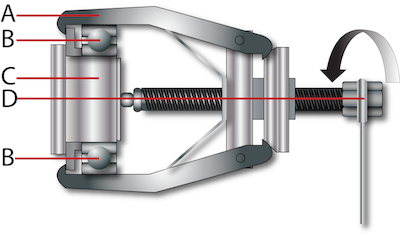
Why Internal Bearing Pullers Are Needed
Many bearings are installed deep inside transmission housings, engine blocks, wheel hubs, or industrial machinery where there is no clearance for standard jaw pullers. Internal bearing pullers solve this problem by gripping the inside of the bearing and pulling it outward safely without damaging surrounding components.
How an Internal Bearing Puller Works
The puller is inserted into the inner diameter of the bearing. Once positioned correctly, the expanding jaws or collet mechanism locks against the inside surface of the bearing. A slide hammer, forcing screw, or hydraulic system is then used to apply pulling force, gradually extracting the bearing from the housing.
Step-by-Step Extraction Process
First, the correct collet or jaw size is selected according to the bearing diameter. Second, the puller is inserted into the bearing bore and expanded to create a secure grip. Third, extraction force is applied using a slide hammer or puller system. Finally, the bearing is removed smoothly from the housing.
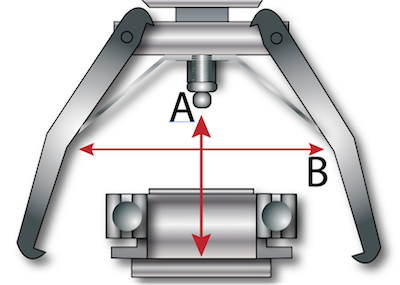
Main Components of an Internal Bearing Puller
Expanding Collets or Jaws
These components expand inside the bearing’s inner race to create gripping force. Different sizes are available to match various bearing diameters.
Slide Hammer or Pulling Mechanism
Most internal pullers use a slide hammer or threaded pulling system to generate extraction force. Hydraulic systems may also be used for heavy-duty applications.
Adapters and Extensions
Adapters allow the puller to fit different bearing sizes and depths, improving flexibility across multiple repair applications.
Types of Internal Bearing Pullers
Slide Hammer Internal Pullers
These pullers use impact force generated by a slide hammer to remove bearings. They are commonly used in automotive and gearbox repair.
Mechanical Internal Pullers
Mechanical pullers use threaded forcing screws to create steady extraction force and are suitable for controlled removal operations.
Hydraulic Internal Pullers
Hydraulic internal pullers generate high extraction force for large bearings and industrial applications where manual force is insufficient.
Common Applications of Internal Bearing Pullers
Internal bearing pullers are widely used in transmission repair, wheel hub maintenance, engine rebuilding, electric motor servicing, and industrial machinery repair. They are especially effective for removing pilot bearings, gearbox bearings, and blind-mounted bearings that cannot be accessed externally.
Advantages of Internal Bearing Pullers
Access to Blind Bearings
Internal pullers can remove bearings installed deep inside housings where external pullers cannot reach.
Reduced Housing Damage
Controlled extraction minimizes the risk of damaging housings, shafts, or surrounding components during bearing removal.
Wide Application Range
Interchangeable collets and adapters allow internal pullers to service multiple bearing sizes and repair scenarios.
Improved Workshop Efficiency
Using the correct internal puller simplifies difficult extraction tasks and reduces repair time in professional workshops.
Internal vs External Bearing Pullers
| Feature | Internal Puller | External Puller |
|---|---|---|
| Grip Location | Inside bearing bore | Outside bearing surface |
| Best Application | Blind or recessed bearings | Exposed bearings on shafts |
| Space Requirement | Minimal outside clearance needed | Requires external jaw clearance |
| Common Industries | Gearbox, engine, industrial machinery | Automotive, wheel hub, general repair |
Summary
An internal bearing puller is a specialized tool used to remove bearings installed inside housings or blind holes where external access is unavailable. By gripping the bearing from the inside and applying controlled extraction force, internal pullers improve repair efficiency, reduce component damage, and support professional automotive and industrial maintenance operations.